
- Sub Menu
ASLC Provides Care in a Rare Ringed Seal Response Case January 30, 2026
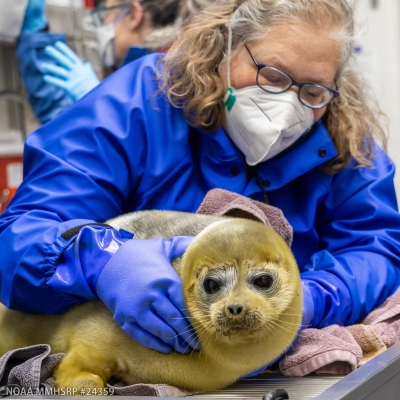
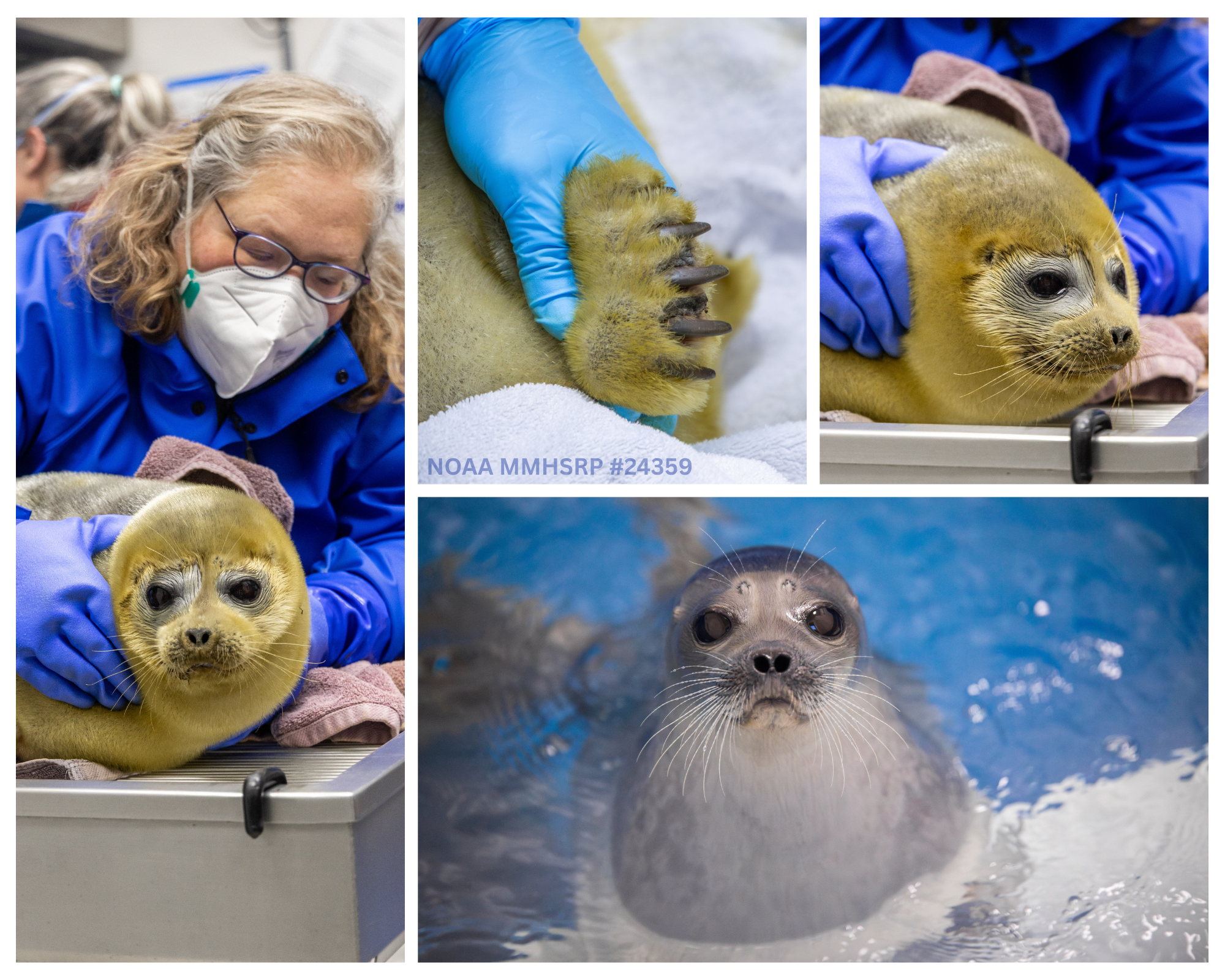
The Alaska SeaLife Center (ASLC) and multiple partners responded to a male ringed seal that was found out of his habitat on an oilfield in Alaska’s Beaufort Sea on Dec. 17, 2025. This is the Center’s first ringed seal response in over four years and one of only 30 ringed seals admitted in the Center’s more than 25-year history, making the case exceptional for the ASLC Wildlife Response Program.
The seal, part of the Arctic subspecies listed as threatened under the Endangered Species Act, was first observed by oilfield operators. Staff contacted NOAA Fisheries, the federal agency that manages the Marine Mammal Health and Stranding Response Program, for guidance. With coordination from NOAA Fisheries, the ASLC, the local operators, and Alaska Clean Seas, the young ringed seal was brought back to the ice, but repeatedly returned to the oilfield.
The ice extending along the coast of Alaska’s Beaufort Sea is a remote Arctic region where winter sea ice extends miles from shore and is often stacked by high winds, making it unlikely that humans could safely escort the seal to open water. Crews at the oilfield used an auger to drill breathing holes in the ice to encourage the seal to access the sea. Although the seal placed his head in the open holes, he did not swim away. When the seal was found moving into areas with heavy machinery, and taking into account the seasonal low light conditions, he was placed into a crate to prevent accidental injury from vehicles. With continued risk to the animal, NOAA Fisheries authorized transport to the ASLC for rehabilitation (MMPA/ESA Permit #24359).
Any response involving ice seals in Alaska requires careful consideration of regulatory policy and respect for the Indigenous communities that rely on these animals for subsistence. In rehabilitation situations involving Alaska’s four ice seal species (ringed, spotted, bearded, and ribbon), the ASLC follows a precautionary non-release policy developed by NOAA Fisheries, an Alaska Native organization, and the Ice Seal Committee: ice seals transported outside of their natural range for treatment and care are not eligible for release. This policy eliminates the risk of disease transmission between marine ecosystems from these individuals, particularly for animals originating from remote and culturally significant regions. In this case, the collaborative decision to admit this ringed seal was not made lightly, as it shapes this seal’s future.
“This response reflects the complexity of wildlife response in Alaska,” said Jane Belovarac, ASLC Wildlife Response Curator. “Our priority with live animals is always to rehabilitate, release, and see animals thrive in the wild. When relocation efforts in situations like this are unsuccessful, and the animal remaining in place is not safe, we are prepared to provide the specialized care needed to ensure their well-being.” ?Currently, only the ASLC and two other facilities in the United States care for ringed seals. As one of the very few ringed seals in human care and a member of the Arctic subspecies listed as threatened under the Endangered Species Act, this seal will serve as an important ambassador for his species and teach us more about the challenges that his species faces as Arctic conditions continue to change.
The ASLC remains committed to working alongside federal agencies, Indigenous partners, and industry collaborators to protect the health of ice seal populations and the ecosystems they depend on. This response reflects the complexity of conservation work in Alaska’s rapidly changing Arctic and the importance of thoughtful, collaborative decision-making when human activity and wildlife intersect. We thank the partners and crews involved in the response, including Alaska Clean Seas, the Ice Seal Committee, members of the Marine Mammal Health and Stranding Response Program, and NOAA Fisheries.
The Center acknowledges the ongoing generous support of the Wildlife Response Program from supporters like ConocoPhillips Alaska, Marathon Petroleum Corporation, PetZoo, Partners 4 Wildlife, Matson, GCI, and a number of individual donors, funds, and foundations such as Stanley J Williams Fund, Mesara Family Foundation, The Theresa Bannister Fund, and the NC Giving Fund.
Call first! Before approaching an injured or stranded marine animal in Alaska, call the 24-hour Stranded Marine Animal Hotline at 1-888-774-SEAL(7325).