
- Sub Menu

Local Volunteer Pilot Helps ASLC Admit Two Orphaned Harbor Seal Pups from Cordova, Alaska June 30, 2026
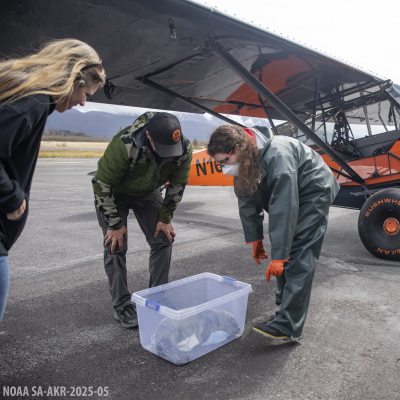
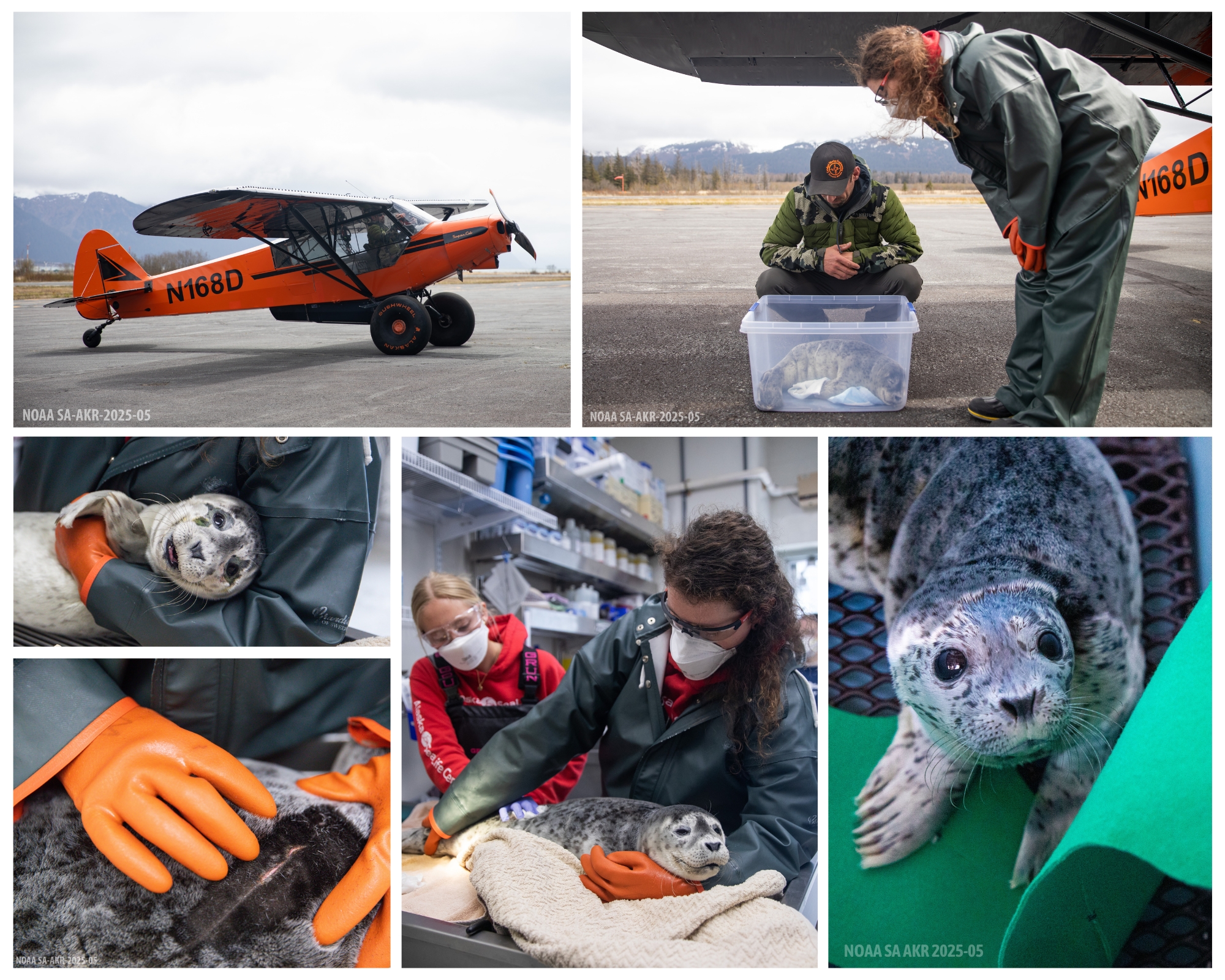
Seward, Alaska (June 30, 2026) – The Alaska SeaLife Center (ASLC) admitted two harbor seal pups to the Wildlife Response Program last week, both making the nearly 300-mile trip to the ASLC by a local Seward pilot who volunteered to pick up and transport the seals from the remote location.
The first pup was found in the waters outside of Cordova with injuries that suggest she may have become entangled in a gillnet. The presence of a fresh umbilical cord indicated that she was likely only recently born, possibly less than 24 hours old. After receiving approval from NOAA, the ASLC team worked with local Seward pilot Duke Marolf and partners in Cordova to transport the pup to the ASLC for rehabilitation. Cordova is a remote area with no main road access, so travel often depends on planes or ferries. Duke's generosity in volunteering his time and aircraft made the rescue possible!
Once the seal arrived at the ASLC, the veterinary team performed an initial admit exam. Their primary concern for patient “PV2604” was a large laceration on the pup's body, along with several areas where the fur appeared compressed or cut. An eye injury was initially suspected, but further examination confirmed that the blood around the eye had originated from another wound. While the ASLC team worked to stabilize the first patient, another report of a seal pup came from an Island west of Cordova.
The second pup was spotted alone on a beach in Boswell Bay on Hinchinbrook Island, unusually far from the water. With no adult seals observed in the area, the pup's condition raised concerns, particularly as she showed signs of severe dehydration. The pup was monitored overnight to confirm that an adult seal did not return. As concerns for the pup grew, including observations of an eagle repeatedly following it along the beach, NOAA authorized its transport to the ASLC for rehabilitation.
Once again, Duke and his wife Pamela graciously volunteered to transport the pup back to the center in their plane, this time flying to the even more remote Hinchinbrook Island to pick up the seal and transport her back to the ASLC.
“What an experience to be able to fly out to an island to pick up an abandoned seal pup! I was able to join Duke for the trip to pick up the second seal, keeping him company and helping keep an eye on the pup during the flight home. What stood out most to me about the whole experience was how much of a team effort these rescues really are. From the people who first notice and report the animals, to the Troopers, local residents, pilots, and the Alaska SeaLife Center staff, everyone plays a part in giving these wild animals a chance, and Duke and I are so grateful to be a part of it,” said Pamela Eiting, Pilot Duke’s wife.
The main concerns found by the ASLC veterinary team upon the initial admit exam for this second pup (PV2605) were significant dehydration, malnourishment, and an ulcer in one eye.
The team is currently providing initial stabilizing treatments for both seal pups, and continue to examine the patients further to understand the severity of their conditions.
It is essential to give seals and their pups space and share coastal areas responsibly during this peak in pupping season for harbor seals. Do not approach, touch, or attempt to move a seal pup. Keep children and pets at a safe distance from haul-out sites and known pupping areas. Approaching or disturbing a marine mammal can cause serious harm to the animal, put people at risk, and may result in violations of the Marine Mammal Protection Act. Responsible viewing ensures that these young animals have the best chance to grow and survive in the wild.
The Alaska SeaLife Center remains ready to respond to reports of stranded and injured marine mammals statewide. If you do see a marine animal in distress in the state of Alaska, call the ASLC Stranded Marine Animal Hotline at 1-888-774-SEAL (7325). We encourage all Alaskans and visitors to save this number in their phone contacts. The ASLC team is available to answer calls to the hotline daily from 8 a.m. to 10 p.m. If we are assisting another animal or unable to answer right away during business hours, please leave a detailed message and we will return your call as quickly as possible. Between 10 p.m. and 8 a.m. please leave a detailed message and we will respond during normal call hours.
For the Alaska SeaLife Center’s Wildlife Response Program to be able to respond to stranded and injured marine animals, it depends on partnerships around the state and the collective support of donors, sponsors, and community members. Supporters can learn more and contribute to the ASLC Wildlife Response program at www.alaskasealife.org/donate.
The Center acknowledges the ongoing generous support of the Wildlife Response Program from supporters such as ConocoPhillips Alaska, Partners 4 Wildlife, Alaska Collection, Stanley J Williams Fund, The Theresa Bannister Fund, M.E. Webber Foundation, and Mike Coffing.