

- Sub Menu
Search results for "Searchfc coins xbox series s Besuche die Website Buyfc26coins.com. Schnell wie nie..ditO"
450 Results Found
450 Results Found
Pages
animatedcollapse.addDiv('1', 'fade=1') animatedcollapse.ontoggle=function($, divobj, state){ //fires each time a DIV is expanded/contracted //$: Access to jQuery //divobj: DOM reference to DIV being expanded/ collapsed. Use "divobj.id" to get its ID //state: "block" or "none", depending on state } animatedcollapse.init() animatedcollapse.addDiv('2', 'fade=1') animatedcollapse.ontoggle=function($, divobj, state){ //fires each time a DIV is expanded/contracted //$: Access to jQuery //divobj: DOM reference to DIV being expanded/ collapsed. Use "divobj.id" to get its ID //state: "block" or "none", depending on state } animatedcollapse.init() Who is watching walrus? Meet... Terril Efird Research Coordinator Terril began studying marine biology in 2001 while working as a research diver in Santa Cruz, California. Since then, he's worked with seals, sea lions, walrus, fish, sea stars, tunicates, sponges and algae. "I love that there is still so much to learn about the ocean. It's remarkable that we depend so greatly on an ecosystem that we are just starting to understand." Hear Terril describe his work at the Alaska SeaLife Center and how he got to this point in his career. (2.5 minutes)
65
News Item
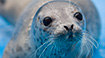
Seward, Alaska (December 11, 2014) - The Alaska SeaLife Center (ASLC) is excited to announce it is currently home to a male bearded seal. Siku, named after the Inuit word for “sea ice,” is the first of his kind to reside at the Alaska SeaLife Center – in fact the first bearded seal to reside in a North American facility. Visitors to the Center can observe Siku during daylight hours from the viewing windows next to the Discovery Touch Pool now until the end of January 2015. Siku will then be transferred to the University of California, Santa Cruz, Long Marine Laboratory to participate in a long-term study on the hearing sensitivity of arctic seals. Researchers at Long Marine Lab are examining the cognitive and sensory systems of marine mammals above and below the water’s surface. Siku will join a project studying the hearing perception of three arctic seal species: spotted, ringed, and bearded seals. Photo courtesy of Taylor Paul Little data exists about the auditory systems of these three species. In particular, there is currently no information on the hearing capabilities of bearded seals. The psychoacoustic study of these species will provide researchers basic information about their auditory system and how common industry noise from oil and gas exploration may affect their hearing. “We are working cooperatively with spotted, ringed, and bearded seals to learn more about how these unique animals perceive the world around them,” UC Santa Cruz Associate Research Scientist Dr. Colleen Reichmuth said. “This project will teach us about the sensory biology of ice-living seals, and will inform best management practices for these species in areas increasingly influenced by human activity.”Approval for the project was granted by the National Marine Fisheries Service and the Ice Seal Commission, which work together to co-manage Alaskan ice seal populations. “We are honored to partner with UC Santa Cruz in this important research project, and we are thrilled to have the opportunity to work with this particular species,” Alaska SeaLife Center President and CEO Dr. Tara Riemer said. “No facility in North America has ever been home to a bearded seal, and we are excited that Alaskans have this opportunity to see such a special animal.” About the ASLC Opened in 1998, the Alaska SeaLife Center operates as a private, non-profit research institution and public aquarium, with wildlife response and education programs. It generates and shares scientific knowledge to promote understanding and stewardship of Alaska’s marine ecosystems. The ASLC is an accredited member of the Association of Zoos and Aquariums, and the Alliance of Marine Mammal Parks and Aquariums. To learn more, visit www.alaskasealife.org. About the UC Santa Cruz Long Marine Lab Long Marine Laboratory is world renowned for innovative research in marine mammal physiology and ecology, marine invertebrate ecology, and marine toxicology. Researchers and staff at the lab have developed specially designed tanks and equipment that are used for studying marine mammal diving physiology, bioacoustics, and cognition. Long Marine Lab and other facilities are located at the UC Santa Cruz Coastal Science Campus on a seaside bluff a short distance from the main campus. For more information about UC Santa Cruz, visit www.ucsc.edu.
65
News Item
Seward, Alaska (May 13, 2021)– The Alaska SeaLife Center (ASLC) admitted a juvenile ringed seal to the Wildlife Response Program yesterday on May 12, 2021. The male ringed seal was found in Dutch Harbor, outside the normal range for this species of seal. The animal was monitored on the beach for several days with the help of local volunteers, and it became evident that the seal was losing weight. After receiving National Oceanic and Atmospheric Administration approval, the animal was transported to the Center. The main concerns of the veterinary team upon the initial admit exam are malnourishment, dehydration, and possible infection. The team is currently providing initial stabilizing treatments and examining the patient further to understand the severity of the animal’s condition. A full press release will be provided with updates on this seal after further monitoring and examination. The Alaska SeaLife Center’s Wildlife Response Program can provide care for animals like this ringed seal because of donations from corporate sponsors and individual donors. People are encouraged to contribute to the care of this patient here: www.alaskasealife.org/donate. The Center acknowledges the ongoing generous support of companies like ConocoPhillips, Marathon Petroleum Corporation, SeaWorld Busch Gardens Conservation Fund, PetZoo, Borman Family Foundation, GCI, Partners4Wildlife, Sea Otter Foundation & Trust, and Grizzly Pet Products. About ASLC Opened in 1998, the Alaska SeaLife Center operates as a 501(c)(3), non-profit research institution and public aquarium in Seward, Alaska. The Center generates and shares scientific knowledge to promote understanding and stewardship of Alaska’s marine ecosystems. The ASLC is an accredited member of the Association of Zoos and Aquariums. To learn more, visit www.alaskasealife.org.
65
News Item
The Alaska SeaLife Center (ASLC) is proud to announce that Wei Ying Wong has been chosen to become ASLC’s first Chief Science and Education Officer. As the first executive to serve in this newly created senior leadership position, Dr. Wong will lead the team of educators and scientists in a collaborative commitment to promote ASLC’s science and education programs. Dr. Wong earned her B.A in Environmental Studies and English Literature from the University of Toronto, and her M.A. and Ph.D. from Brown University. She comes to ASLC after serving as Assistant Director for Science and Technical Assistance at Washington Sea Grant in Seattle. Dr. Wong has additionally served in executive roles at the Woodland Park Zoo, the Philadelphia Zoo, and The Ocean Project in Providence, Rhode Island. “We are very fortunate to find a leader with Wei Ying’s passion for education, science and conservation,” says ASLC President and CEO Tara Riemer. “She brings to us more than 20 years of experience as a highly respected educator, speaker and scientist. Creating this new senior leadership position represents our commitment to bring our experienced educators and world class scientists even closer together to advance our mission.” Dr. Wong has a background in cultural ecology, market research, and strategic communications. “As an avid scuba diver, the marine ecosystem has special resonance for me,” says Dr. Wong. “I am excited to be part of this catalyst for growth at the Center, and the opportunity it provides to amplify our impact through integrating our scientific endeavors and educational engagements. I am excited to join with our visitors and communities in becoming wildlife advocates.” The Chief Science and Education Officer will be part of the Alaska SeaLife Center’s senior management team and serve as staff liaison to the Scientific Advisory Committee. Dr. Wong will start in her new role December 6, 2021. About ASLC Opened in 1998, the Alaska SeaLife Center operates as a 501(c)(3), non-profit research institution and public aquarium in Seward, Alaska. The Center generates and shares scientific knowledge to promote understanding and stewardship of Alaska’s marine ecosystems. The ASLC is an accredited member of the Association of Zoos and Aquariums. To learn more, visit www.alaskasealife.org.
65
Pages
animatedcollapse.addDiv('1', 'fade=1') animatedcollapse.ontoggle=function($, divobj, state){ //fires each time a DIV is expanded/contracted //$: Access to jQuery //divobj: DOM reference to DIV being expanded/ collapsed. Use "divobj.id" to get its ID //state: "block" or "none", depending on state } animatedcollapse.init() animatedcollapse.addDiv('2', 'fade=1') animatedcollapse.ontoggle=function($, divobj, state){ //fires each time a DIV is expanded/contracted //$: Access to jQuery //divobj: DOM reference to DIV being expanded/ collapsed. Use "divobj.id" to get its ID //state: "block" or "none", depending on state } animatedcollapse.init() NO MATTER WHERE YOU LIVE, YOU CAN DO YOUR PART TO HELP CARE FOR THE BERING SEA! Since changes to the Bering Sea food web will directly impact people around the world, it's everyone's responsibility to do our part to care for the ocean. You might feel like there's not much you can do to preserve the health of clams and copepods in the Bering Sea, but in fact you CAN help! Here are ideas of positive things you can do: Educate yourself about how humans are impacting climate in the Arctic and around the globe. Do your part to help lessen our impact: Learn about your carbon footprint and about what earth-friendly actions you can take in your everyday life. Then, take the pledge. Let us know: What's one thing you'll do to help care for the ocean? Coming Soon: Ocean Ally Quiz! Find out how things you already do every day help the ocean. WHO IS STUDYING SEA ICE?
64
News Item
Seward, Alaska (June 05, 2017)– Summer time fun is in full swing at the Alaska SeaLife Center (ASLC) with new exhibits and experiences for visitors! Expanded summer hours now through September 3 are: Monday – Tuesday – Wednesday – Thursday: 9:00 am – 9:00 pm Friday – Saturday – Sunday: 8:00 am – 9:00 pm Octopus, sea otters, puffins, and sea stars, oh my! By popular demand, there are four new experiences at ASLC offered starting this summer. Similar to the classic 60-minute Encounter Tours, the new 30-minute Experience Tours offer guests an approach to learn more about Alaska’s fascinating marine life. Experiences cost $24.95/adult and $19.95/child 2-12 years, plus the price of admission or membership. Pick one, or pick them all; the choice is yours! The Aquarist Experience is offered at 11:30 am on Tuesday, Thursday and Saturday. During this experience, join a member of the aquarium team for a feeding and learn about the unique skill set it takes to care for the nearly 200 species of fish and invertebrates here at ASLC. This small group tour is limited to six guests and for ages six and up. Suckers, tentacles, and beaks – that’s what you get during the Octo Experience. This tour offers an octopus feeding while learning about these fascinating creatures. This tour is at 4:00 pm on Sunday, Monday, Wednesday and Friday. This tour limited to 14 guests and all ages. Love birds? Then the Avian Experience is for you. Join an education bird and their trainer to learn how diving sea birds adapt to life below the waves. Learn all about the birds at ASLC with the birds! This experience is at 4:00 pm on Tuesday, Thursday and Saturday. Tour limited to 14 guests and for ages six and up. Sea Otters are more than just cute! On the Sea Otter Experience, learn about how these remarkable marine mammals survive in the cold waters of the North Pacific Ocean. Join our animal care staff and observe a feeding or animal enrichment session. Tour limited to 14 guest and is open to all ages. Don’t miss the new interactive exhibits in our recently renovated underwater viewing area including the Octo Grotto, home to a giant Pacific octopus; the Seal Hop and the Alaska Jelly Jam. There is so much to see this summer, you may even work up an appetite or want to grab some coffee while you are visiting. Don’t worry – our café is open too! Grab a cup of coffee or a quick meal and snack to fuel the rest of your day in Seward. Our café opened on June 1 with new hours: Thursday: 9:00 am – 3:00 pm Friday – Saturday – Sunday: 8:00 am – 3:00 pm Reservations are recommended for all encounters, experiences and tours, 1-888-378-2525. Prices listed do not include tax. All tours and encounters require purchase of general admission. All guests under the age of 16 must be accompanied by a paying adult. High resolution photos available from media@alaskasealife.org; 907-422-7075. About the Alaska SeaLife Center: Opened in 1998, the Alaska SeaLife Center is a private, non-profit 501(c)(3) research institution and public aquarium. It generates and shares scientific knowledge to promote understanding and stewardship of Alaska’s marine ecosystems. The ASLC is an accredited member of the Association of Zoos and Aquariums. To learn more, visit www.alaskasealife.org or find us on Facebook.
64
News Item
Seward, Alaska (April 21, 2022) – The Alaska SeaLife Center (ASLC) has partnered with KultureCity to be the first Sensory Inclusive Certified organization in the State of Alaska. With this new certification, ASLC is now better prepared to assist guests with sensory sensitivities in having the most comfortable and accommodating experience possible when visiting. Sensory sensitivities or challenges with sensory regulation are often experienced by individuals with autism, dementia, PTSD, and other similar conditions. “At the Alaska SeaLife Center, we are making it a priority to be as inclusive and welcoming as possible. We strive to be allies and advocates for anyone who wants to join us in our efforts for ocean conservation,” said Jeff Dillon, ASLC Senior Education Manager. “We want to make sure we are understanding, welcoming, and supportive of the nearly 1 in 6 individuals with an invisible or sensory disability. Being certified and trained through KultureCity is critical to that effort.” In preparation for certification, the staff at the Alaska SeaLife Center was trained through KultureCity by leading medical professionals on how to recognize those guests with sensory needs and the best way to handle a sensory overload situation. Prior to visiting, guests can find accessibility information and resources on the ASLC website. Guests can also download the free KultureCity app to view what sensory features are available and the Social Story, which will provide a preview of what to expect while visiting the Alaska SeaLife Center. Sensory bags provided by KultureCity are available at the Center for any guest who may feel overwhelmed by the environment. Sensory bags are equipped with noise-canceling headphones, fidget tools, verbal cue cards, and weighted lap pads and will be available free of charge to check out at the ticketing counter. These guests will also be provided with resources that designate what areas may be loud and will have access to a designated quiet area if needed. “Our communities are what shapes our lives and to know that the Alaska SeaLife Center is willing to go the extra mile to ensure that everyone, no matter their ability, is included in their community is amazing. We’re honored to partner with the Alaska SeaLife Center to provide a truly inclusive experience for all fans and guests!” said Uma Srivastava, Executive Director, KultureCity. About KultureCity KultureCity is a leading non-profit recognized nationwide for using its resources to revolutionize and effect change in the community for those with sensory needs, not just those with autism. Since the program’s inception, KultureCity has created over 900 sensory inclusive venues in 5 countries and has won many awards for its efforts.
64
News Item
Seward, Alaska (October 25, 2016)– Scientists from the Alaska SeaLife Center (ASLC) recently returned from the first research mission to utilize new satellite technology for the study of harbor seal populations. The month-long expedition to the Aleutian Islands on board the research vessel Norseman, was conducted in collaboration with the National Oceanic and Atmospheric Administration’s (NOAA) Polar Ecosystems Program. “The population trends and factors that may be influencing harbor seals remain poorly understood,” said ASLC President and CEO Tara Riemer. “We are excited to increase our understanding of harbor seals and for the potential to better inform the science community and resource managers.” Co-funded by the National Oceanic and Atmospheric Administration, the study brings together scientists from two different organizations to collaborate on the next steps toward understanding and addressing shared concerns. Using Life History Transmitters (LHX), developed by Dr. Markus Horning, ASLC Science Director, in collaboration with Wildlife Computers, Inc. under funding from the National Science Foundation, researchers will be able to collect survival and reproductive data to better understand harbor seal population trends. Harbor seals in the Aleutian Islands declined by about 67% in the last two decades of the 20th century, and 50-80% during the same time frame in areas west of the Gulf of Alaska. LHX tags are surgically implanted and have a life span of 10 years or more. Using post-mortem satellite-linked data retrieval, LHX tags can provide data on timing and causes of mortality, and reproductive data from females. This allows researchers to estimate birthrates, quantify predation pressure, and analyze other drivers of population trajectories. Externally attached tags glued to the fur of seals are also used in this study by National Marine Fisheries Service (NMFS) scientists, but typically fall off during the annual molt. “This satellite tagging project combining externally attached tags and the newly developed implanted tags will allow us to compare and assess data we’ve not had access to before,” said Dr. Horning, ASLC science director and principal investigator for the LHX portion of the study. “It will help us set parameters for a long-term study and provides a better window into the challenges harbor seals are facing, particularly in the Aleutian Chain area.” ASLC staff working with Dr. Horning on the mission were veterinarian Dr. Pam Tuomi and Research Associate Renae Sattler, as well as Sea World Florida veterinarian Dr. Stacy DiRocco. This research is being conducted under NMFS permit no. 19309 and all applicable animal research and ethics guidelines. Details on the LHX tags can be found on: www.sealtag.org. The mission was chronicled and photographed by the Polar Ecosystems Program team on their blog, Dispatches from the field: Studying at-risk harbor seals in western Aleutians. A link to the blog may be found on at www.alaskasealife.org. About the Polar Ecosystems Program:The Marine Mammal Laboratory’s Polar Ecosystems Program conducts research and monitoring on pinnipeds in the Arctic, sub-Arctic, and Antarctic marine ecosystems. The research projects focus primarily on abundance, trends, distribution, and foraging behavior of harbor, bearded, ringed, spotted, and ribbon seals in Alaska. The primary objectives of the program are to support management and assessment of population status under the Marine Mammal Protection Act, and to gain a better understanding of the factors responsible for the dynamics of populations and their roles in the ecosystem. Photo courtesy of Shawn Dahle, NOAA NMFS permit 19309.
63
News Item
The Alaska SeaLife Center (ASLC) is preparing for a busy summer season as the new Rocky Coast Discovery Pools open. This past Saturday, May 29, the Center saw 1,713 visitors pass through the facility, a record number for May for at least the past fifteen years. Visitors are strongly encouraged to purchase tickets ahead of time to guarantee their date and time of entry. Saturdays in particular are booking up fast; last weekend the entrance wait time for walk-ins reached 2 hours. Ticket reservations: www.alaskasealife.org/tickets While the increased tourism is welcomed, the team is still working to keep people safe by requiring masks and managing capacity. “We are grateful for the attendance level we are experiencing after a difficult 2020. While we can handle an increase in visitation, we must prioritize safety for both people and animals by continuing mask use and encouraging social distancing,” explains Tara Riemer, ASLC President and CEO. She continued, “Many of our younger guests under age 16 have not had the chance to become fully vaccinated, and their safety is of utmost importance.” The recent opening of the Rocky Coast Discovery Pools is also expected to attract even more visitors. Phase one of the new 1,100 gallon exhibit build offers guests a hands-on opportunity to explore Alaskan fish and invertebrate species in 6 pools. ASLC is thankful to the contributors of this new exhibit: ConocoPhillips Alaska, First National Bank Alaska, Matson, Petro Marine Services, Shoreside Petroleum, and the Lindsey Family. About ASLC: Opened in 1998, the Alaska SeaLife Center is a private, non-profit 501(c)(3) research institution and public aquarium. It generates and shares scientific knowledge to promote understanding and stewardship of Alaska’s marine ecosystems. The ASLC is an accredited member of the Association of Zoos and Aquariums. To learn more, visit www.alaskasealife.org or find us on Facebook.
63
News Item
The Alaska SeaLife Center Board of Directors announced today that Dr. Tara Riemer is stepping down after 20 years of service with the Center, the last 11 years as President and CEO. Board Chair Josie Hickel said a national search will take place to find a replacement for Dr. Riemer. She said the board will seek a new leader who will carry forward the Center’s mission into a new phase of growth and development. She added that The Foraker Group will assist a board transition committee in a well-planned and expansive search for the next CEO. “We are confident that we will find a qualified and dynamic leader to join the board and the Center’s strong management team,” Hickel said. “We expect a smooth transition. Dr. Riemer plans to remain in her position to support a successful transition effort.” Dr. Riemer said that even though she is choosing to leave her position, she still strongly supports the Alaska SeaLife Center and its mission, and she expressed gratitude to the board, staff, and community for the support they have given her. “I leave with many fond memories of my work at the Center,” Dr. Riemer said. “One of the best was my chance to provide hands-on help to rehabilitate a baby beluga whale. For me, that brought our mission to life. To work with our amazing animals and such a passionate staff has been an extremely rewarding experience.” Dr. Riemer pointed to one project that demonstrates the dedication and commitment of the Center’s board and staff. “During COVID we faced a significant funding challenge,” she said. “To meet this challenge, we launched the Save the Alaska SeaLife Center Campaign. Its goal was to raise $2 million to make up for revenue losses during the pandemic. Without the funds, the Center would have closed, and animals would have been moved to other locations. This message reached people in Alaska and beyond, and the Center is now more financially secure.” Hickel expressed deep appreciation to Dr. Riemer on behalf of the board not only for her leadership and service but also for her commitment to a thoughtful transition process. “When Dr. Riemer joined the Alaska SeaLife Center 20 years ago, she brought business acumen and a background in scientific research,” Hickel said. “Under her leadership, the Center has grown and developed into a world-class organization providing education, research, and programs that have improved our knowledge of Alaska’s unique marine environment.” “Dr. Riemer is leaving the Center in a much better position than when she first started working here,” Hickel concluded. “She will be greatly missed by the board, our employees, donors, and the whole Alaska SeaLife Center community. We wish her all the best in her future endeavors.”
63
Pages
animatedcollapse.addDiv('1', 'fade=1') animatedcollapse.ontoggle=function($, divobj, state){ //fires each time a DIV is expanded/contracted //$: Access to jQuery //divobj: DOM reference to DIV being expanded/ collapsed. Use "divobj.id" to get its ID //state: "block" or "none", depending on state } animatedcollapse.init() animatedcollapse.addDiv('2', 'fade=1') animatedcollapse.ontoggle=function($, divobj, state){ //fires each time a DIV is expanded/contracted //$: Access to jQuery //divobj: DOM reference to DIV being expanded/ collapsed. Use "divobj.id" to get its ID //state: "block" or "none", depending on state } animatedcollapse.init() Who is watching walrus? Meet... Jill Prewitt Research Associate Jill has worked with many species of animals, from bobcats and wolves to belugas and walrus. She worked as an animal trainer and a veterinary technician before becoming a researcher. "I love learning how these species survive in such a challenging environment." Hear Jill describe her work at the Alaska SeaLife Center and how she got to this point in her career. (3 minutes)
62
News Item
Seward, Alaska (June 07, 2017) – On Thursday, June 8, the Alaska SeaLife Center (ASLC) will join the global celebration of World Oceans Day. This year’s theme is “Our Oceans: Our Future.” With paid admission, ASLC is celebrating with free interactive and educational activities for the whole family with a special emphasis on reducing marine debris. “By learning about the ocean, its importance and our influence on it, we can all help to protect and preserve this important natural resource,” said Jeff Dillon, ASLC senior education manager. World Oceans Day activities for all ages will be available between 9:00 am and 9:00 pm (see detailed activity schedule below), including an opportunity to shake wings with ASLC mascot, Tuffy the Puffin, and explore exhibits through the new, interactive Ocean Quest game. Visitors may also help build a floor mural out of plastic bottle caps, a common source of marine debris. Making his world debut is “Alex,” a four foot high Orca sculpture created by 5th grade students from Anchorage’s Willow Crest Elementary School as part of the our Sea Journey education program. The students collected and recycled plastic packaging from their school lunches to build the sculpture, drawing attention to the presence of plastics in our daily lives. Also debuting on June 8 in the Center’s theater is an inspiring new film that documents one man’s commitment to addressing marine debris, from childhood to adulthood. Visitors will be invited to participate in the “Plastic Footprint Challenge” by tracking their plastic usage for one week. Are you up for the challenge that can help save our oceans and our future? Come take the “Plastic Pledge” to show your support. There will even be a photo booth to take photos and share with your friends on social media! “This World Oceans Day we hope to inspire and challenge our visitors to make an informed choice to stop marine debris and help clean up the oceans,” said Dillon. “Come join us and celebrate this amazing blue marble of ours and appreciate the life the ocean allows us to live.” World Oceans Day Schedule 11:00 am: Steller sea lion feeding 11:00 am –12:00 pm: Meet Tuffy 12:00 pm: Feeding in the bird habitat 12:15 pm: Marine debris presentation 2:00 pm: Steller sea lion feeding 3:00 pm: Feeding in the bird habitat 3:15 pm: Keeper chat with avian staff 3:30 pm: Marine debris presentation All-Day Events Bottle cap mural activity for all ages Marine animal coloring activity for kids Marine debris film debut in theater Ocean Quest marine debris scavenger hunt Alex the Orca on display Plastic pledge and photo booth Daily encounters, experiences and behind the scenes tours are available throughout the summer. Reservations are recommended (1-888-378-2525) and age restrictions apply. Alaska SeaLife Center hours through September 3, 2017, are: Friday – Saturday – Sunday 8:00 am – 9:00 pm Monday – Tuesday – Wednesday – Thursday 9:00 am – 9:00 pm About the ASLC Opened in 1998, the Alaska SeaLife Center operates as a private, non-profit research institution and public aquarium. It generates and shares scientific knowledge to promote understanding and stewardship of Alaska’s marine ecosystems. The ASLC is an accredited member of the Association of Zoos and Aquariums. To learn more, visit www.alaskasealife.org. High resolution photos available from media@alaskasealife.org; 907-224-6370. Media contact Email: media@alaskasealife.org.
62
News Item
The Alaska SeaLife Center’s (ASLC) Wildlife Response Program now has three harbor seal pups under its care after the admit of two new patients — one female from Kachemak Bay on May 20, and another female from the Copper River Delta on May 27. The first pup was spotted by kayakers near Bradley Lake power plant, and images identified it as a premature birth due to its white lanugo coat (typically shed in utero). Unfortunately, the pup’s location along mud flats would make access difficult for most boats — a situation compounded by a high wind advisory that day. After many hours on the phone with Homer water taxis and National Oceanic and Atmospheric Administration (NOAA) law enforcement, rescue attempts had to be called off. Two days later, the situation took a fortunate turn when a second party called with similar reports of a lanugo pup in the same area. Pictures sent matched those from the original call, leading staff to conclude it was likely the same seal. Because the party had a small skiff already beached in the area, they agreed to retrieve the seal and transport it from Kachemak Bay to Homer, where it was handed off to ASLC staff and transported back to Seward. This newest patient is the third lanugo pup to be admitted this season (the first of which died soon after admit due to challenges related to its premature birth, and the second of which remains under the care of wildlife response staff). The second abandoned pup report came from a Cordova State Wildlife Trooper on behalf of a fleet of commercial fishermen. The fisherman reported that the seal had been seen without its mother for multiple days, and was beginning to appear exhausted. With permission from NOAA, a wildlife trooper landed a plane on a nearby beach and took possession of the seal to be transported to the ASLC. The pup stayed the night in Cordova, receiving supportive care from local medical personnel, before catching a flight to Anchorage the following day. The pup was then picked up by NOAA officials and handed off to ASLC wildlife response staff. During their initial admit exams, both pups were found to be underweight and dehydrated, with the premature pup suffering additionally from malnourishment and several surface wounds. Because premature harbor seal pups have only about a 50% survival rate when admitted to a wildlife response program, delicate care will be necessary. The team is currently providing initial stabilizing treatments to both patients and keeping a close watch to ensure the best possible chance of survival. Updates will be shared on the ASLC’s Facebook and Instagram pages as they become available. Call first! Before approaching an injured or stranded marine animal in Alaska, call the 24-hour Stranded Marine Animal Hotline at 1-888-774-SEAL(7325). The Alaska SeaLife Center’s Wildlife Response Program can only provide care for stranded and injured marine animals with help from corporate sponsors and individual donors. The Center acknowledges the ongoing generous support of the Wildlife Response Program from supporters like ConocoPhillips Alaska, Marathon Petroleum Corporation, PetZoo, Partners 4 Wildlife, Matson, GCI, and a number of individual donors, funds, and foundations such as Stanley J Williams Fund and the Theresa Bannister Legacy Fund. Those interested in contributing to the care of these patients can visit the ASLC’s website: www.alaskasealife.org/donate.
62
News Item
Seward, Alaska (August 5, 2016)– The Alaska SeaLife Center (ASLC) is proud to announce the release of a male Pacific harbor seal pup on Saturday, August 6. The timing of the pup’s release coincides with the Center’s 18th Annual Wildlife Rescue Run & Walk, a fundraiser benefitting its Wildlife Response Program. The public and media are invited to attend. What:Harbor seal pup release When:Saturday, August 6, 2016 at 2:45pm Where:Public beach area southwest of the Alaska SeaLife Center along Lowell Point Road, by the waterfall, in Seward, Alaska. The pup was admitted to ASLC on May 17. Citizens reported seeing him on a beach in Seward near a high-traffic area, which may have deterred the mother from returning. After observing the pup alone for more than two hours and seeing no sign of the mother in the vicinity, Wildlife Response Program staff brought him to the Center. The pup, estimated to be one day old, showed signs of mild dehydration. Staff immediately began providing him the appropriate support and monitoring his progress around the clock. In the following 11 weeks, Ipuk (meaning snail in the Sugpiaq language) was rehydrated and transitioned from a high fat, milk-based formula to eating and catching live fish. In hisfinal veterinary exam yesterday he met weight criteria and staff determined he was ready for release. “Ipuk’s successful rehabilitation could not be more in tune with the events of this weekend,” said Dr. Kathy Woodie, staff veterinarian. “His release is the culmination of a lot of hard work by our staff and a wonderful opportunity for Wildlife Rescue runners, walkers, and sponsors to witness first-hand the program they are supporting.” The ASLC is the only permanent marine mammal rehabilitation center in Alaska, responding to wildlife such as seals, sea otters, and also seabirds. The Program is authorized to respond to stranded harbor seals under an agreement with NOAA. “Our Wildlife Response Program relies on donations to operate, respond to, and care for marine mammals and seabirds that are found injured or stranded throughout the state,” said President and CEO Dr. Tara Riemer. “We thank our 2016 program sponsors, Shell Exploration and Production and ConocoPhillips, Alaska, for their generous program support of wildlife rescue, rehabilitation and oil spill response readiness.” ASLC’s 2017 Wildlife Response Program funding is currently unsecured and will rely on additional corporate sponsors and individual donations. One lucky Wildlife Rescue participant will be selected to assist in Ipuk’s release. The race awards and door prize event will begin at 2:00pm in the Center’s atrium, following the race, which begins at 12:00pm. More information on the race can be found at this link: https://alaskasealife.ejoinme.org/MyEvents/2016RescueRun/tabid/783524/Default.aspx About the ASLC Opened in 1998, the Alaska SeaLife Center operates as a private, non-profit research institution and public aquarium. It generates and shares scientific knowledge to promote understanding and stewardship of Alaska’s marine ecosystems. The ASLC is an accredited member of the Association of Zoos and Aquariums. To learn more, visit www.alaskasealife.org. The Alaska SeaLife Center operates a 24-hour hotline for the public to report stranded marine mammals or birds,and encourages people whohave found a stranded or sick marine animal to avoid touching or approaching the animal. Call first! 1-888-774-SEAL
61
News Item
Seward, AK (March 19, 2018)– The Alaska SeaLife Center (ASLC) has admitted its first stranded seal of 2018, a male ringed seal from Dutch Harbor. Following a record-breaking wildlife response year in 2017, ASLC’s team is more than prepared to rehabilitate the second patient of 2018. Bystanders first spotted the animal lying on a rusty pipe on Dutch Harbor’s rocky shore. Unalaska resident and Alaska Sea Grant Agent, Melissa Good was called to the scene to further observe the the animal. “When I approach an animal and it does not respond, that is the first indication something is very wrong,” Good states. The underweight seal’s balding coat and lethargic demeanor raised additional red flags for the Sea Grant Agent. With authorization from National Oceanic and Atmospheric Administration (NOAA) and ASLC, the seal was recovered from the shore and transported to Anchorage courtesy of PenAir where it was met by ASLC’s wildlife responders. Once transported to the Alaska SeaLife Center on March 11, the seal was treated first for severe dehydration and malnourishment. Upon further examination, ASLC staff veterinarians found the animal to have lung worm, parasites, liver issues, a high white cell count, and an irregular molt. While this animal arrived in very poor condition, the staff remains cautiously optimistic as they begin 24-hour care. ASLC veterinarian, Dr. Kathy Woodie states, “Although this seal has a laundry list of health issues, his feisty demeanor shows promise.” This animal is non-releasable due to the NMFS policy established for the four species of Alaskan ice seals. Ribbon, bearded, spotted, and ringed seals are considered non-releasable in the state due to consideration of subsistence hunters. With the Alaska SeaLife Center responding to stranded marine mammals along 33,904 miles of coastline, Stranding Agreement partnerships, like Alaska Sea Grant are critical. Also necessary are charitable donations that are responsible for over 80% of the funding for ASLC’s Wildlife Response program. ASLC President and CEO Tara Riemer explains, “During this time of year we are thankful to all the Alaskans that donate through Pick.Click.Give. Their contributions support the care of animals like this seal from Dutch Harbor.” The Alaska SeaLife Center operates a 24-hour hotline for the public to report stranded marine mammals or birds,and encourages people whohave found a stranded or sick marine animal to avoid touching or approaching the animal. Call first! 1-888-774-SEAL. About the ASLC Opened in 1998, the Alaska SeaLife Center operates as a private, non-profit research institution and public aquarium. We are excited to be celebrating 20 years of generating and sharing scientific knowledge to promote understanding and stewardship of Alaska’smarine ecosystems. The ASLC is an accredited member of the Association of Zoos and Aquariums. To learn more, visit www.alaskasealife.org. High resolution photos and full story available from media@alaskasealife.org or 907-224-6334.
61
News Item
Seward, Alaska (June 13, 2018) –A female harbor seal pup and female sea otter pup, both just days old, were recently admitted to the Alaska SeaLife Center (ASLC). These two responses illustrate the importance of public awareness of proper stranding protocols. The harbor seal pup was found stranded on May 10, north of Homer. In the area she was found, it is speculated she was separated from her mother when the tides changed drastically. Wildlife Troopers transported the seal to ASLC wildlife responders. After thorough examination and rehydration, she was deemed a prime candidate for release. Staff is hopeful that if the pup continues to stabilize she will be prepped for release in the area where she was found. The sea otter pup was spotted by boaters floating alone in the middle of Prince William Sound. The good Samaritans became concerned when they heard the pup screaming and saw no signs of other otters in the area. They noticed the pup go face down in the water, which sparked them to pick the animal up. On June 1, she was transported to the Center. ASLC veterinarian, Dr. Kathy Woodie noted, “We’re so pleased she readily took to bottle feeding. Often sea otter pups take days before they will latch on a bottle and must be tube fed to receive critical nutrients.” While this little pup is strong, veterinarians are monitoring her for pneumonia from inhaling sea water; so far she shows no signs. Since the Alaska SeaLife Center responds to 33,904 miles of coastline, we rely on stranding partners and civilians to assist in accessing sick or injured marine mammals so medical care can be provided. However, when an animal is perceived to be in distress, the first reaction from an untrained observer is often to approach the animal. An immediate response can be a mistake as it is sometimes difficult to distinguish distress from normal behavior. Animal Care Specialist, Halley Werner notes, “Some animals leave their young in what they perceive to be a safe place while foraging for food and will return shortly. If you are concerned about an animal, before you intervene, call first 1-888-774-SEAL.” Marine animals have been safeguarded by the Marine Mammal Protection Act since 1972, so any disturbance to them is illegal without permission from the correct government authorities. If a sick or injured animal is encountered, ASLC staff urge people to call first, observe at a safe distance, respect the animal's territory, and keep pets and children away. ASLC operates a 24-hour stranding hotline where trained professionals will walk people through the proper steps to assist the animal. Call 1-888-774-SEAL if you see a marine mammal in distress. The Alaska SeaLife Center's Wildlife Response Program is funded by donations of both individuals and corporate donors such as BP, ConocoPhillips, SeaWorld Busch Gardens Conservation Fund, PetZoo, and GCI. About the Alaska SeaLife Center: Opened in 1998, the Alaska SeaLife Center is a private, non-profit 501(c)(3) research institution and public aquarium. We are excited to be celebrating 20 years of generating and sharing scientific knowledge to promote understanding and stewardship of Alaska’s marine ecosystems. The ASLC is an accredited member of the Association of Zoos and Aquariums. To learn more, visit www.alaskasealife.org or find us on Facebook.
61
News Item
Seward, Alaska (July 13, 2020) - The Alaska SeaLife Center (ASLC) announces an urgent public information and fundraising campaign to raise $2 million in funding by September 30. Uniquely impacted by the COVID-19 pandemic, ASLC will not be able to maintain operations of the Center through the winter due to a lack of summer visitor revenues. ASLC is preparing to do everything possible to change course, including marshaling a combination of public support and funding opportunities. Due to being closed for two months, the lack of summer visitors, and travel restrictions caused by COVID-19, ASLC expects annual visitor revenues to be reduced by 70%. The Center is completely dependent on summer visitors, typically seeing 90% of guests between May and September. “Aquariums like ASLC are especially vulnerable during this difficult time because we can’t reduce operating costs like most businesses—we can’t just shut the doors, turn off the lights and furlough staff,” said President and CEO Tara Riemer. “We need to maintain good animal care, maintain the building, and keep seawater pumping throughout the building every minute of every day.” Closing ASLC would be a permanent decision. Animals would be sent to other facilities, staff would be laid off, the keys of the building would be turned over to the City of Seward, and ASLC would turn off the seawater pumps that are the building’s life support. This action cannot be undone. “The Alaska SeaLife Center is important, not just to Alaskans but to the world. It’s a key part of Alaska’s tourism infrastructure,” said ASLC Board of Directors Chair Wendy Lindskoog. “Closure of the Center has terrible consequences—the loss of it would be staggering.” In addition to being a top destination for Alaska’s visitors, the Center is a home for invaluable research about the ocean, arctic and subarctic marine wildlife, climate change, and more. As an important part of Alaska’s science education system, the Center provides educational opportunities to students all around the state and around the world through distance programs. ASLC will launch a robust fundraising campaign, beginning now and running until September 30 in the hope of reversing course on this trajectory. The board of directors and staff of ASLC implore the world to help support the Center right now in their time of greatest need by visiting, becoming members, or making a donation to the Alaska SeaLife Center. ASLC will also take every opportunity to identify and secure sustaining funds. Though Alaska’s visitor industry has paused, life goes on at the Center, and so do the needs of the animals. We are thrilled to announce the birth of a female Steller sea lion pup on June 26. The newborn is the offspring of ASLC’s 11-year-old resident male, Pilot, and 17-year-old female, Mara. “Mara is proving to be a doting, attentive, and protective mom,” states Husbandry Director, Lisa Hartman. As newborn pups cannot swim for several weeks, the team will continue to monitor the pair in a behind the scenes enclosure with supervised water access for Mara. Mara, her pup, and the rest of the animals that reside at the Center continue to get top quality care, in fulfillment of Alaska SeaLife Center’s mission. -end- About ASLC: Opened in 1998, the Alaska SeaLife Center operates as a 501(c)(3) non-profit research institution and public aquarium in Seward, Alaska. The Center generates and shares scientific knowledge to promote understanding and stewardship of Alaska’s marine ecosystems. The ASLC is an accredited member of the Association of Zoos and Aquariums. To learn more, visit www.alaskasealife.org.
61
News Item
Seward, Alaska (November 10, 2015) – The Alaska SeaLife Center (ASLC) is saddened to announce the passing of Woody, a 22-year-old male Steller sea lion who was one of the Center’s original residents. Woody was humanely euthanized Monday following a rapid decline due to age-related complications. In the wild, male Steller sea lions almost never live beyond their teens. As a result of Woody’s mature age, staff had been monitoring his health closely and addressing various age-related issues such as arthritis and slow healing. While male sea lions typically lose a significant amount of weight in the fall, Woody lost more weight at a faster rate compared to previous years. Despite attempts by animal care and veterinary staff to reverse this trend, he lost interest in food and stopped participating in regular feeding sessions over the past two weeks, culminating in profound weight loss. A necropsy is currently being conducted. Woody was born in May 1993 and came to the ASLC from the Vancouver Aquarium with females Sugar and Kiska when they were all five years old. While female Steller sea lions typically live longer than males, Woody was the last remaining member of this original sea lion cohort. Sugar died this past March of bone cancer and Kiska died in 2010 of pancreatic cancer. Woody is survived by two offspring, Ellie born in June 2013 and Forrest born in July 2014. Ellie and Forrest are the first Steller sea lions born in a North American aquarium since the 1980s. Their births were part of a maternal investment research program. ASLC’s Steller sea lion research programs significantly contribute to the understanding of these animals in the wild– their reproduction, habitats and sustainability. Woody’s participation in these studies occurred at a critical time for Steller sea lion populations in Alaska, some of which are still listed as endangered. Since 1998, over two million visitors had the opportunity to meet Woody at the ASLC. He was well-known for his sheer size (topping out over 2400 pounds in 2014), large personality, and curious intelligence. Husbandry Manager Lisa Hartman who worked with Woody since 1998, reminisced about Woody: “He was synonymous with ASLC for nearly 18 years—our iconic face and personality. Children have grown up knowing him. He commanded attention and will be missed beyond measure.” In honor of Woody, two funds are currently being established that honor what Woody loved best – his home and the children of Alaska. About Steller Sea Lions Steller sea lions are the largest member of the eared seal family. The species ranges across the northern Pacific Ocean, from Japan through the Aleutian Islands and southeast Alaska to northern California. Divided into eastern and western regions, the western population is currently listed as endangered. About the ASLC Opened in 1998, the Alaska SeaLife Center operates as a private, non-profit research institution and public aquarium. It generates and shares scientific knowledge to promote understanding and stewardship of Alaska’s marine ecosystems. The ASLC is an accredited member of the Association of Zoos and Aquariums. To learn more, visit www.alaskasealife.org.
60
News Item
Seward, Alaska (Updated: May 23, 2016) – The Alaska SeaLife Center (ASLC) is pleased to announce implementation of a ground breaking CO2 refrigerant heat pump system, realizing the goal of shifting 98% of the Center’s annual heating needs from fossil fuel to ocean water as source heat. Seven years in development, and achieved in two phases, the new system utilizes sea water from Resurrection Bay to heat the 120,000 square foot facility, dramatically slashing heating costs and carbon emissions. This is the first installation of CO2 refrigerant heat pumps to replace oil or electrical boilers in a conventional heating system in the United States. The ASLC estimates the Center’s heat pump systems save as much as $15,000 per month, with an annual carbon emissions reduction of 1.24 million pounds per year in comparison to the original oil fired boilers. “This project reflects the core mission of the Alaska SeaLife Center “to generate and share scientific knowledge to promote understanding and stewardship of Alaska’s marine eco-systems,” said Darryl Schaefermeyer, ASLC Special Projects Director. “It illustrates the broad and tangible ways in which our day to day work can contribute to the long term health and sustainability of the City of Seward, the State of Alaska and the global community.” According to Schaefermeyer the heat pump system is also providing much needed cooling of both mechanical and electrical rooms in the building. Waste heat recovered from these rooms is returned to the heat pump system, avoiding the cost of conventional cooling. Designed by Andy Baker of the Anchorage consulting firm of YourCleanEnergy, with assistance from Mechanical and Electrical Engineers from Anchorage-based EDC Inc., the 80-ton trans-critical CO2 heat pump system pushes seawater through a titanium-plate heat exchanger, returning cooled seawater to the ocean and converting captured heat through a high pressure system that is ultimately blended into the main building heat loop, circulating through all office baseboards at 160°F. “The big news in the final implementation of the system is the use of trans-critical CO2 heat pumps. This is absolutely unique in the field,” said Baker. “We were delighted to work with the ASLC on this project.” The first phase of the project involved installation of a 180 ton heat pump system that utilized a synthetic refrigerant known as R-134a, which has some greenhouse warming potential. In Phase II of the project, CO2 refrigerant replaced R-134a, dramatically reducing the potential environmental impact of the system. Once captured, the heat from seawater warms a mixture of glycol and water. The glycol then passes through four parallel heat pumps where it comes into contact with 99.9% pure CO2 refrigerant. The CO2 boils and the vapor is compressed above its critical point to 2,000 psi which raises its temperature. The hot high-pressure CO2 passes through a gas cooler, heating hydronic water to 194°F. Finally, the hot water is then blended into the main building heat loop. “As a mission driven non-profit organization, this project is doubly important,” said Tara Riemer, President and CEO, Alaska SeaLife Center. “We are benefitting the environment and saving money at a time when both are very critical.” The ASLC project was realized through funding from the Denali Commission Emerging Energy Technology Program, the Alaska Energy Authority Renewable Energy & Emerging Energy Technology Fund, the M.J. Murdock Charitable Trust and the Rasmuson Foundation. About the ASLC Opened in 1998, the Alaska SeaLife Center operates as a private, non-profit research institution and public aquarium. It generates and shares scientific knowledge to promote understanding and stewardship of Alaska’s marine ecosystems. The ASLC is an accredited member of the Association of Zoos and Aquariums. To learn more, visit www.alaskasealife.org. High resolution photos available from media@alaskasealife.org; 907-224-6397.
60
News Item
Seward, Alaska (September 1, 2016)– The Alaska SeaLife Center (ASLC) announced today the new fall/winter hours for 2016-2017. Beginning Monday, September 5, the hours will be: September 5 – October 2 10:00am – 5:00pm* *(Early opening to accommodate cruise ship visitors: Sept. 8 & 12, 9:00am; Sept. 11 & 18, 8:00am) October 3 – February 26 12:00 – 5:00pm (ASLC will be closed Nov. 24 & Dec. 25) February 27 – May 25 10:00am – 5:00pm May 26 – September 3 9:00am – 9:00pm Mon-Thurs/8:00am – 9:00pm Fri – Sun The Center will continue offering guided tours on a daily basis throughout the fall and winter seasons. The tour schedule September 5 through May 25 is as follows: 1:00pm The Marine Mammal Encounter invites guests to join the ASLC animal care team to see how they train, feed, and care for resident marine mammals. This 60-minute tour can accommodate a maximum of 5 people per tour, with a minimum age of 10 years old.** Marine Mammal Encounter tours are $74.95 per person. 1:30pm The Octopus Experience is led by expert animal care givers and is suitable for ages 6 and up. This 30-minute tour gives visitors the opportunity to learn more about the giant Pacific octopus and join animal care givers to observe a feeding.** Octopus Experience tours are $24.95 per Adult (13+), $19.95 per Child (6-12). 2:00pm The Puffin Encounter joins birds and their keepers in the aviary to learn about ASLC research and breeding programs. This 60-minute tour can accommodate a maximum of 4 people, with a minimum age of 10 years old.** Puffin Encounter tours are $74.95 per person. 3:00pm The Octopus Encounter invites visitors to shake “hands” with a giant Pacific octopus and learn more about these mysterious invertebrates. This 60-minute tour can accommodate a maximum of 5 people per tour, with a minimum age of 6 years old.** Octopus Encounter tours are $74.95 per person. 4:00pm The Sea Otter Experience (offered through October only) gives visitors the opportunity to join animal caregivers to observe a feeding or animal enrichment session in the outdoor otter pool. This 30-minute tour can accommodate a maximum of 14 people, with a minimum age of 6 years old.** Sea Otter Experience tours are $24.95 per Adult (13+), $19.95 per Child (6-12). Reservations are recommended for all encounters and tours, 1-888-378-2525. Prices listed do not include tax. All tours and encounters require purchase of general admission. **All guests under the age of 16 must be accompanied by a paying adult.
60
News Item
Seward, Alaska (January 3, 2017)– The Alaska SeaLife Center is pleased to kick-off 2017 with Winter FISHtival! Each Saturday during the month of January the Center will offer special family friendly activities led by animal care experts and educators. All activities are included in the cost of admission and free to members. Winter FISHtival Saturday events include: Magnify Magic, Underwater Adventure, and a Deep Diving Seabird Scatter Feeding. Step up to the microscope for a really close look at some of the smallest and most fascinating sea animals. Join our educators in the underwater viewing area to do the seal hop and learn more about sea lions and seals! See some high-speed, deep diving seabird action and find out how these birds are specially adapted for under-sea foraging. Additionally, each week we will highlight a special marine animal or group of marine animals: Saturday, January 7: Weird fish With over 80 species of fish from Alaska in our aquariums, some of them are just bound to be a little more weird, a little more cool! Our aquarists are excited to show you some of the weirdest, coolest fish in our aquariums. You will learn more about what makes these fish special and how our team takes care of these amazing animals! Saturday, January 14: Wolf eels Observe our dive team conduct an underwater feeding of a six foot long wolf eel! Our aquarists and educators will be on hand as we watch the dive team feed the adult wolf eel that lives in a rocky den in our two-story 95,000 gallon aquarium. Next we will head upstairs to observe a feeding of two young wolf eels living in our Kelp Forest tank. Learn about these amazing animals that have fang shaped teeth and an impressive bite force for pulverizing prey - but are typically friendly to divers and can be trained to feed on command. Saturday, January 21: Jellies, nudibranchs, sea cucumbers and other squishy things Join our aquarists and educators to explore the amazing and diverse world of invertebrates. Join the team as we look for newest arrivals in our tanks, observe a feeding and learn more about how we take care of these unique animals. Saturday, January 28: Incredible octopus Meet Gilligan, a giant Pacific octopus in our Octo Grotto and learn more about one of the most intelligent members of the marine world. Our aquarists and educators will share their knowledge about these animals and then we will head up to our research theater to observe a feeding of two younger animals. The Alaska SeaLife Center is open daily during the winter 12 noon - 5 p.m. We offer discounts for Alaska residents, seniors and U.S. military. All Winter FISHtival activities are included in the cost of admission and free to members. For more information on WinterFISHtival Saturdays, visit the Alaska SeaLife Center on Facebook or www.alaskasealife.org. Special winter hotel rates are available at Hotel 360, Breeze Inn and Hotel Seward. For additional information on hotels and restaurants in Seward, contact the Seward Chamber of Commerce at 907-224-8051 or www.seward.com. About the ASLC Opened in 1998, the Alaska SeaLife Center operates as a private, non-profit research institution and public aquarium. It generates and shares scientific knowledge to promote understanding and stewardship of Alaska’s marine ecosystems. The ASLC is an accredited member of the Association of Zoos and Aquariums. To learn more, visit www.alaskasealife.org. High resolution art available from media@alaskasealife.org; 907-224-6334
60
News Item
Seward, Alaska (May 11, 2020) – The Alaska SeaLife Center (ASLC) admitted a female harbor seal pup into their Wildlife Response Program on May 4. On May 3, the pup was found near a ferry terminal in Haines, Alaska by Haines Animal Rescue Kennel. The organization responded appropriately by contacting ASLC and National Oceanic and Atmospheric Administration (NOAA) first before moving the pup. After NOAA approval was received, the seal was transported safely to ASLC the following day. This pup was the second harbor seal the team attempted to rescue from Haines over the course of just two days. The first pup passed before arriving at the Center. When the surviving pup entered ASLC’s Wildlife Response Program , the staff were immediately surprised to see she was very small, only 12 lbs, and had full lanugo. Lanugo is the soft fur on newborn pups. While ice seals are typically born with lanugo, it is rare harbor seals are born with it. “This may be the smallest harbor seal I have seen. Because of her size, lanugo, and various exam and diagnostic results, we believe she is only a few days old and premature,” declared Director of Animal Health, Dr. Carrie Goertz, D.V.M. The immaturity of this seal’s immune system due to her premature birth signals to staff that she has a long road to recovery. According to veterinary staff, while she had no physical trauma upon admission, she had obvious respiratory and cardiovascular issues. With her health issues, just seeing her make it through the first night was uplifting for the team. “Her situation is critical though she does seem to be getting stronger,” states Wildlife Response Curator, Jane Belovarac. Caring for wildlife response patients while under unusual regulations due to COVID-19 is more complicated for the staff. “It requires us to be more thoughtful and efficient when more than one person is needed to accomplish procedures. We all wear masks, plan a lot in advance, and move apart as soon as possible,” explains Dr. Goertz. Since COVID-19 is affecting operations, the Center is assessing stranding events on a case-by-case basis to ensure staff safety. As always, ASLC encourages people to call first if they find a marine animal in distress. The Alaska SeaLife Center is a 501(c)(3) not-for-profit organization and the only permitted marine mammal rehabilitation center in Alaska. Over 80% of the funding for ASLC’s Wildlife Response Program comes from charitable donations. The Center is thankful for individual donors and organizations like Marathon Petroleum Corporation, SeaWorld & Busch Gardens Conservation Fund, BP Alaska, ConocoPhillips Alaska, PetZoo, GCI, HDR Marine, and Graphic Works whose generous support helps ASLC care for marine mammals like harbor seals. About the ASLC Opened in 1998, the Alaska SeaLife Center operates as a 501(c)(3), non-profit research institution and public aquarium in Seward, Alaska. The Center generates and shares scientific knowledge to promote understanding and stewardship of Alaska’s marine ecosystems. The ASLC is an accredited member of the Association of Zoos and Aquariums. To learn more, visit www.alaskasealife.org.
60
News Item
Seward, Alaska (August 5, 2020) The Seward Community Foundation (SCF) and Alaska SeaLife Center (ASLC) are jointly announcing a membership drive to boost ASLC’s local membership base. Starting today, SCF will contribute $25 to the Alaska SeaLife Center for each of the next 100 memberships purchased by Seward and Moose Pass residents. These memberships will also be eligible for a prize drawing. In July, the Alaska SeaLife Center (ASLC) announced an urgent fundraising campaign to raise $2 million by September 30. Uniquely impacted by the COVID-19 pandemic, ASLC will not be able to maintain operations of the Center through the winter due to a lack of summer visitor revenues and faces permanent closure if these funds are not raised. SCF is responding to this call for help by motivating local residents to become supporters of the Center through a local membership campaign. “The Seward Community Foundation is pleased to help the Alaska SeaLife Center while promoting philanthropy within our local community,” said David Paperman, SCF Vice President and Grant Team Lead. “Each new membership is a way to show your support and love of what has become an essential part of the Seward community—a non-profit organization whose very existence relies on the generous support of average Sewardites. Therefore, each ASLC member has the satisfaction of becoming a philanthropist.” “While we are overwhelmed by the community support over the past three weeks, we still have not met our fundraising goal,” said ASLC President and CEO Tara Riemer. “We are thrilled to have the support of Seward Community Foundation to help reach our dual goals of 5,000 member households and $2 million of overall contributions by September 30.” ASLC and SCF thank the community members and businesses who have contributed to a prize drawing to be held at the end of the membership campaign. Prizes include: Bear Glacier iceberg kayaking trip for two with Liquid Adventures Two seats at a catered group dinner at Zudy’s with other ASLC supporters Fifteen pounds of halibut from the F/V Chandalar with fall delivery “Life After Death” 15x24 art print by Marissa Amor Art Sustainable eating kit with reusable beeswax wraps, water bottles, straws, and bag The SCF-sponsored membership campaign will continue until 100 memberships are purchased by Seward or Moose Pass residents. SCF and ASLC hope that this target is reached within two weeks. All levels of new and renewed memberships are eligible, including individual, dual, family, and giving circles. Memberships and gift memberships are available for online purchase at https://www.alaskasealife.org/memberships. About SCF Founded in 2008, the Seward Community Foundation is an Affiliate of The Alaska Community Foundation. SCF’s goal is to support projects that enhance the quality of life for Seward and Moose Pass residents, addressing immediate needs while working toward long-term improvements. To learn more, visit www.sewardcf.org. About ASLC Opened in 1998, the Alaska SeaLife Center operates as a 501(c)(3), non-profit research institution and public aquarium in Seward, Alaska. The Center generates and shares scientific knowledge to promote understanding and stewardship of Alaska’s marine ecosystems. The ASLC is an accredited member of the Association of Zoos and Aquariums. To learn more, visit www.alaskasealife.org. -end-
60
Calendar Event
Make your way around Seward and visit local businesses hosting featured artists during the Seward First Friday Art Walk! Visit the ASLC lobby from 6 - 8 PM on July 1, 2022 to see this month's TWO featured artists: Dreaming Bear Studio & Rabbit Creek Studio Dreaming Bear Studios will have items displayed in the ASLC Lobby for the month of July. See more of the artist's work on their websites - Rabbit Creek Studio: https://rabbit-creek-studio.square.site/ https://www.facebook.com/kimnielsenak/ Dreaming Bear Studio: https://www.dreamingbearstudio.com/ Seward First Friday Art Walks are hosted by the Seward Chamber of Commerce and Seward Art Council.
60